Custom Flag Wholesale Buying Guide For Businesses
If you're placing your first bulk flag order—or your fifth—the pricing you get depends almost entirely on decisions made before you ever talk to a supplier. Most business buyers start by searching for custom flag wholesale pricing, comparing a few websites, and picking whoever looks cheapest. That approach leaves money on the table nearly every time. The per-unit price on a quote sheet is the least useful number to compare if you haven't locked down your material, print method, and order structure first. This guide is built around the decisions that actually move the needle on total cost and final quality, based on what we see go right and wrong across thousands of B2B orders every year at our factory.
[aiwriter engine="anthropic/claude-sonnet-4.6" id="225" name="自动写内容段落要求"]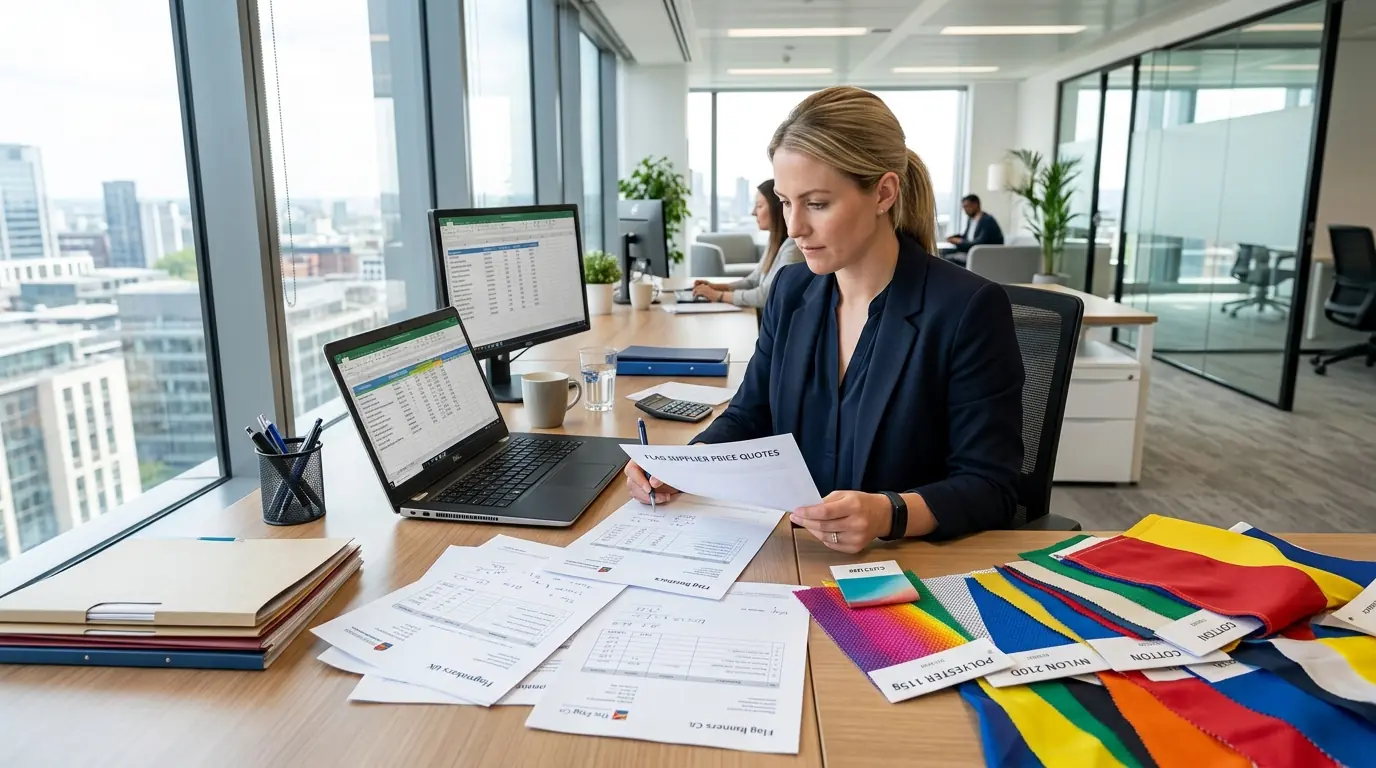
How Custom Flag Wholesale Pricing Actually Works
Quantity discount tiers exist everywhere, but the structure varies more than most buyers expect. A common tiered model looks something like 10% off at 10–24 units, 15% off at 25–49, and 20% off at 50–99, with anything above 100 moving to a custom quote. Those tiers sound straightforward, but the base price they're discounting from is the part that matters—and that base price shifts dramatically depending on where you're buying.
The real split is between three sourcing channels: direct factory, regional distributor, and online print-on-demand platforms. A platform like VistaPrint or an Amazon storefront seller is convenient for five to ten units, but the per-unit cost typically runs 20–30% higher than what you'd pay going direct to a custom flag manufacturer in China. Regional distributors sit in between—they hold inventory, offer faster domestic shipping, and sometimes provide design services, but their margins get baked into your price. For a 3×5 ft polyester flag with full-color digital printing, the landed cost from a Chinese factory might be $4–7 per unit at 100+ quantity, while the same spec through a US-based platform could easily hit $12–18.
That said, factory-direct pricing only wins if you're buying enough to justify the shipping timeline and logistics overhead. Below about 25 units, the cost advantage shrinks fast once you factor in international freight and the longer lead time. A useful threshold: if your annual flag spend is under $500 total, platforms are fine. Above $1,000, you should be getting at least one factory-direct quote to benchmark against.
One strategy that works particularly well for businesses with recurring flag needs: batch consolidation. Instead of ordering 30 flags for a June trade show and then 40 more for a September storefront refresh, combine them into a single production run. You hit a higher quantity tier, the factory only does one setup, and your per-unit cost drops on both batches. Some buyers go further and sign annual agreements that lock in pricing across multiple drops throughout the year. If you're running the same logo across wholesale corporate flags with your logo and event banners, standardizing your design files also eliminates repeated setup fees.
[aiwriter engine="anthropic/claude-sonnet-4.6" id="225" name="自动写内容段落要求"]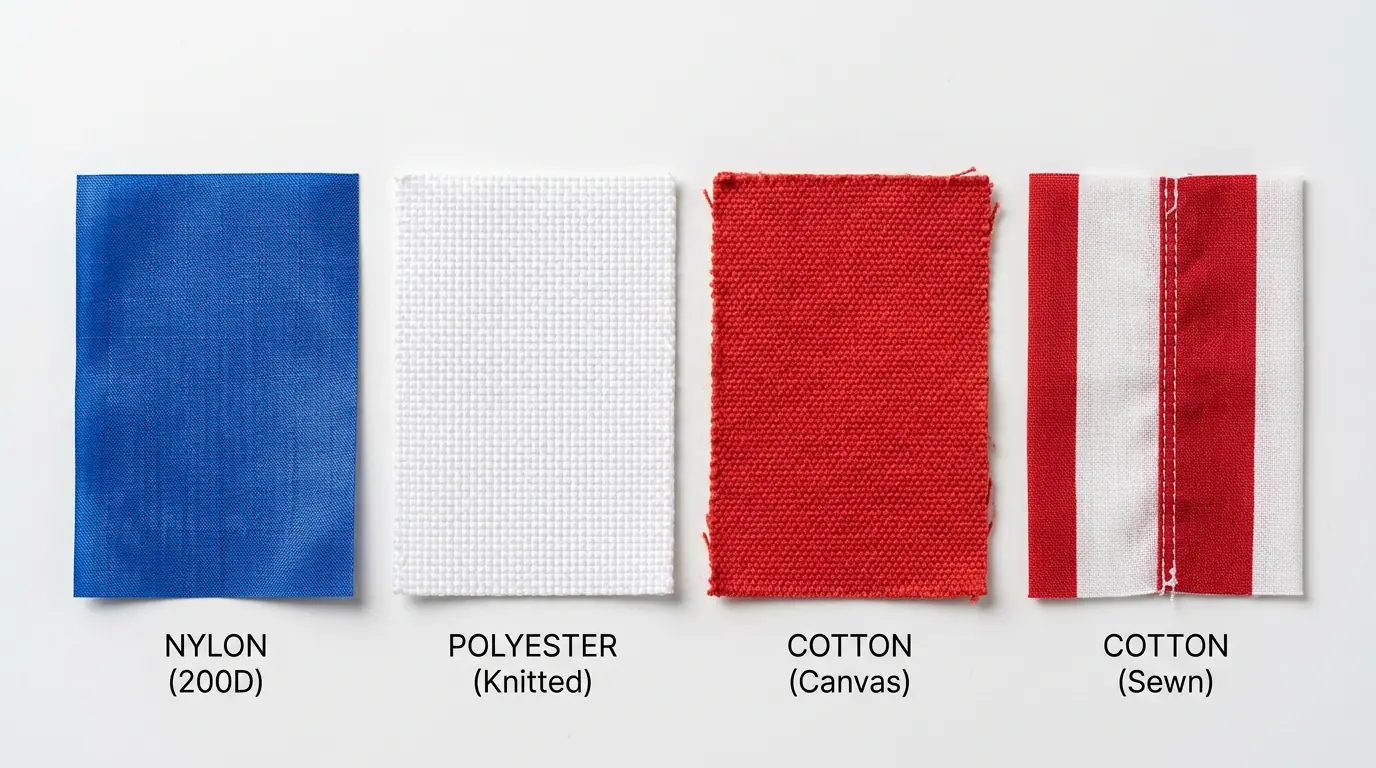
What Materials Drive Cost and Durability
Material choice is where most first-time wholesale buyers either overspend or get burned. The instinct is to pick the "best" fabric, but the right fabric depends entirely on where the flag will live.
For outdoor use, the real choice is between nylon and polyester. Nylon is lighter, flies in lower wind, resists UV fading better, and has natural anti-mold and waterproof properties. It's the standard for government and institutional flags for good reason. Polyester is heavier, holds up better in strong wind, and is significantly more durable for high-traffic environments—think car dealership lots, construction sites, or coastal locations where flags take a beating. If your flags will be outdoors for more than 90 days straight, polyester is usually the better investment. For seasonal event use where you'll take them down after a few weeks, nylon gives you a more vibrant look at a lighter weight. You can explore the full range of flag fabric options from our manufacturing facility to see how each performs.
Indoor display flags are a different calculus. Cotton has a premium, traditional feel—ideal for boardrooms, lobbies, or ceremonial contexts—but it wrinkles easily and doesn't hold vibrant color the way synthetic fabrics do. Lightweight knitted polyester has become the go-to for indoor trade show flags and office displays because it prints beautifully and hangs flat. The fabric itself is often the smaller part of the indoor flag cost; hardware matters more than most quotes reveal. Pole sleeves, grommets, D-rings, tassels, fringe—each finishing detail adds to the total. A flag quoted at $5 can become $9 once you add a pole sleeve and brass grommets. Always ask for the fully finished price, not just the flag panel price.
[aiwriter engine="anthropic/claude-sonnet-4.6" id="225" name="自动写内容段落要求"]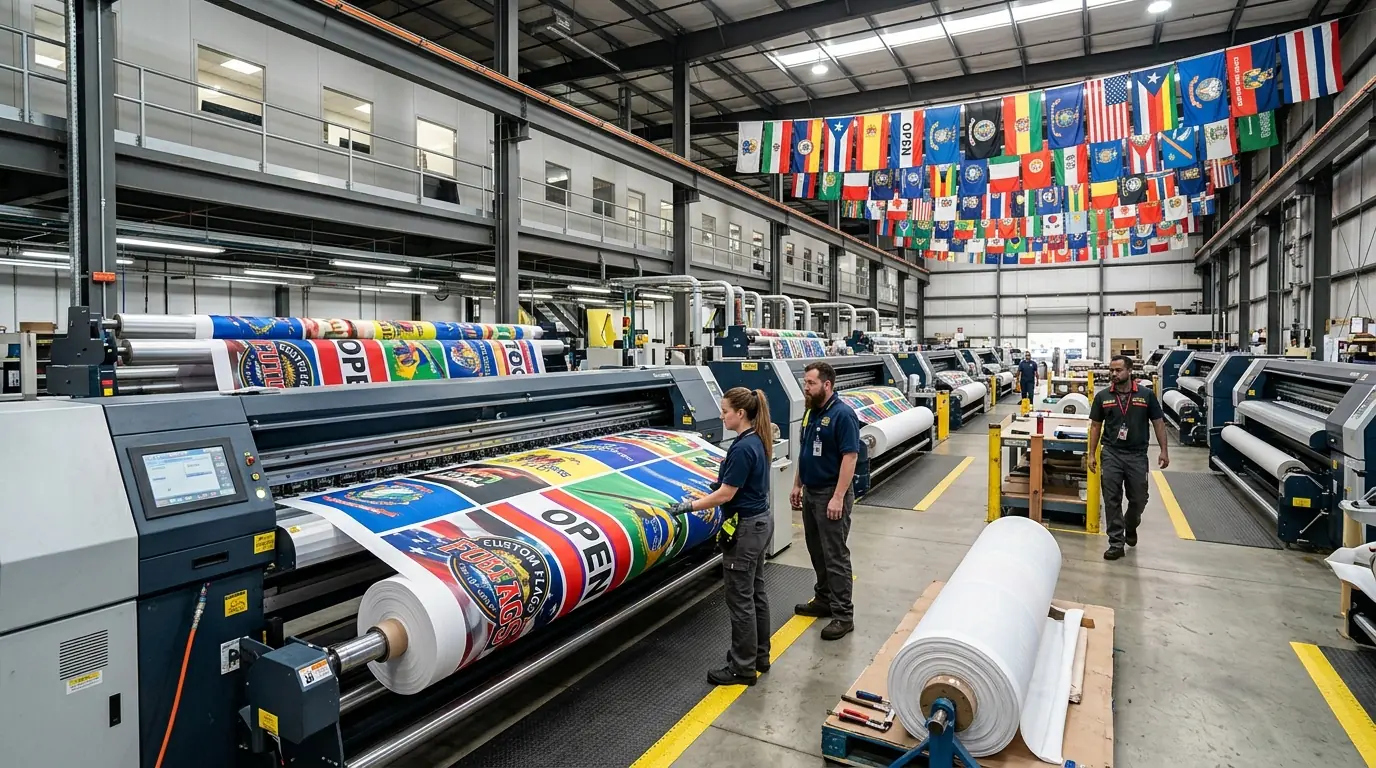
Print Methods: Where Quality and Cost Diverge
Digital dye-sublimation printing dominates the custom flag industry right now, and for good reason. It handles full-color, photographic, and gradient designs without any additional setup per color. For most business buyers ordering custom designs, this is what you'll get—and what you should want. The ink bonds with polyester fibers at a molecular level, so it won't crack, peel, or wash off. If a supplier is quoting you "screen printing" for a full-color custom flag in 2024, either they're outdated or they're talking about a very different product.
Appliqué and embroidery still have their place, but it's narrow. Embroidered flags are high-end—think military unit insignias, fraternal organizations, or corporate presentation pieces where the texture and depth of stitching conveys prestige. They cost multiples of a printed flag and take significantly longer to produce. Appliqué (sewn-on fabric pieces) works for simple designs with large, bold shapes—like national flags with color blocks. For the vast majority of B2B custom orders involving logos, detailed artwork, or photography, digital printing is both the most cost-effective and highest-quality option.
[aiwriter engine="anthropic/claude-sonnet-4.6" id="225" name="自动写内容段落要求"]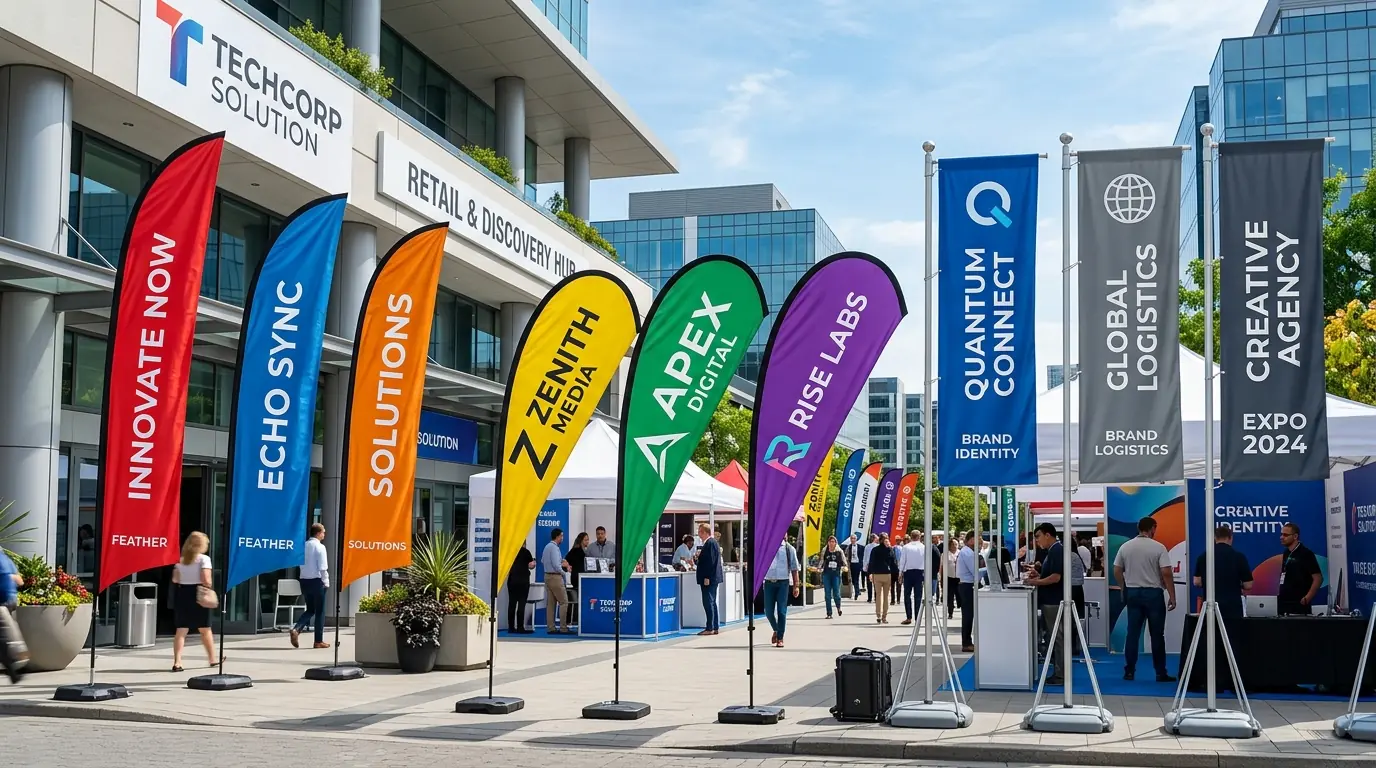
Choosing The Right Flag Type For Your Business Use Case
This is where buyers waste the most money—not on materials or printing, but on picking the wrong flag format for their actual use case. A rectangular 3×5 ft flag is the default, and it works fine mounted on a building or lining a car lot. But it's often the wrong choice for trade shows, retail storefronts, or outdoor advertising where you need flags to be visible from a distance without a permanent pole infrastructure.
Wholesale feather flags for outdoor advertising are what you want for parking lots, sidewalk frontage, and event entrances. Their tall, narrow profile catches the eye from a distance, they come with portable ground stakes or cross bases, and they stay readable even without wind because the pole holds the flag taut. Wholesale teardrop flags for events and trade shows serve a similar function but with a different visual profile—the teardrop shape concentrates your design in a wider viewing area near the top. For indoor trade shows, teardrops tend to edge out feather flags because they don't need wind to display properly and have a cleaner, more structured look.
Pennant strings and mini flags (12×18 inch) work for car lots, grand openings, and festival atmospheres but aren't really "branding" vehicles—they're decoration. Don't spend money on Pantone color matching for pennants strung across a used car lot. Save that budget for your primary branded flags.
On single-sided versus double-sided: single-sided flags print the design on one side, and the image shows through in reverse on the back. They're lighter, cheaper, and perfectly fine for any situation where people primarily see the flag from one direction. Double-sided flags use two separate fabric panels with a blocking layer in between, so both sides read correctly. They weigh roughly twice as much, catch more wind (which means more stress on hardware), and typically add $30–60 per flag depending on size. The common mistake is ordering double-sided when you don't need to. If your flag hangs flat against a wall or sits in a trade show booth where one side faces a wall, you're paying for a feature nobody will ever see. Double-sided makes sense for street pole banners, island displays, or freestanding wholesale advertising flags for business campaigns where foot traffic comes from both directions.
[aiwriter engine="anthropic/claude-sonnet-4.6" id="225" name="自动写内容段落要求"]Vetting Suppliers Before Placing A Bulk Order
If you're thinking "I'll just pick the supplier with the best reviews on their website," stop. Every supplier's website shows five-star reviews. That tells you nothing. What actually matters is verifiable track record and a willingness to let you test before you commit.
For US-based manufacturers, FMAA (Flag Manufacturers Association of America) certification is one signal worth checking—it means the company meets specific manufacturing standards. But most custom flag wholesale happens through overseas factories now, so FMAA is less relevant than it used to be for the broader market. More useful: ask whether they've fulfilled orders for government agencies, schools, or large corporations. These institutional buyers have procurement standards that filter out the worst operators. A factory that regularly ships to municipalities or franchise chains has passed vetting you don't need to repeat yourself.
The single most important step is a sample order. Not a digital mockup—an actual physical sample made with your artwork, on the material you specified, using the print method quoted. This costs money (usually $30–80 for a single custom sample including shipping), and it takes time. It's still the cheapest insurance you'll ever buy. What you're checking: color accuracy against your brand standards, print sharpness at edges and fine details, stitching strength at the header and grommets, and fabric weight. That last one is where the most common scam happens on low-cost platforms—a supplier quotes 150gsm polyester but ships 90–110gsm. The flag looks okay in photos but feels flimsy and won't survive a week outdoors. A kitchen scale and a pair of scissors can verify fabric weight in thirty seconds. If the sample is off, the bulk order will be off in the same way, only now you have 500 of them.
You can review our step-by-step custom flag manufacturing workflow to understand what a transparent production process should look like at each stage.
[aiwriter engine="anthropic/claude-sonnet-4.6" id="225" name="自动写内容段落要求"]MOQ and Lead Times: What Actually Varies by Supplier Type
No-MOQ platforms exist and they serve a purpose. Companies like BestFlag or CustomFlagCompany will produce a single unit for you, which is useful for prototyping or very small promotional runs. The tradeoff is straightforward: you're paying a premium per unit that can be two to four times higher than bulk pricing. That's not a rip-off—it reflects the reality that setup, file preparation, and quality checking cost roughly the same whether you're making one flag or one hundred.
Traditional US-based wholesalers often operate on an account basis. Some require a minimum opening order (commonly around $200), annual minimums, and a business license on file. This model made more sense before Chinese factories started accepting direct international orders at low minimums, and it still works for buyers who want domestic shipping speeds and don't mind the markup.
Going factory-direct from China—which is what we do—typically means MOQs between 1 and 100 units depending on the product type, with production lead times of 10–20 business days. The critical number most buyers overlook isn't MOQ or lead time—it's landed cost. A flag quoted at $4.50 from a Chinese factory doesn't cost $4.50 when it reaches your warehouse. Shipping (air vs. sea), customs duties, and broker fees add up. For orders under about 200 units, air freight is usually the only option that makes timeline sense, and it can add $1–3 per flag. Above 200–300 units, sea freight becomes viable and drops the shipping component dramatically. If you need help calculating landed cost for your specific order size, get in touch for bulk pricing and we'll break it down with actual freight quotes rather than estimates.
[aiwriter engine="anthropic/claude-sonnet-4.6" id="225" name="自动写内容段落要求"]Artwork and Customization Requirements That Affect Your Quote
Most pricing surprises come from artwork issues, not material or quantity changes. Here's the decision that matters most: file format.
Vector files (AI, EPS, or vector PDF) are the standard for production-ready artwork. They scale to any size without losing sharpness, and they eliminate guesswork in color and detail. If you submit a raster image—a JPEG or PNG pulled from your website—two things happen. First, the factory either charges a conversion fee or quietly attempts to auto-trace it, which often degrades fine details like thin text or complex gradients. Second, any print clarity issue becomes a dispute about whether the file or the printing was at fault. Spending $50–150 to have a graphic designer produce a clean vector file before you order saves far more than that in avoided reprints and finger-pointing.
Color specification is the other major cost lever. Standard CMYK four-color digital printing handles the vast majority of designs well. But if your brand guidelines specify exact Pantone colors—and if color consistency across different flag batches and different product types actually matters to your business—you need to specify Pantone references explicitly. Pantone matching typically adds 15–25% to the print cost because it requires custom ink mixing and separate proofing. Is it worth it? For a national franchise maintaining brand consistency across hundreds of locations, absolutely. For a one-time event banner, probably not. The question isn't "is Pantone better" (it is), but whether the difference is visible enough in your use case to justify the cost. On a flag flapping in wind thirty feet away, the difference between Pantone-matched red and CMYK-approximated red is essentially invisible.
Design complexity directly impacts both setup fees and per-unit cost. Gradients, photographic elements, and designs with more than six or seven colors print fine with digital sublimation, but they require more careful color proofing and more test runs to get right. Simple, bold designs with solid colors and clean edges are the fastest and cheapest to produce—and honestly, they tend to be the most effective flags anyway, because readability at distance matters more than visual complexity. If you're ordering wholesale large format banner printing or wholesale country flags from a certified factory, keeping the design clean isn't just a cost decision—it's a functional one.
[aiwriter engine="anthropic/claude-sonnet-4.6" id="225" name="自动写内容段落要求"]Conclusion: Your Custom Flag Wholesale Decision Starts Here
The biggest mistake in custom flag wholesale isn't picking the wrong supplier—it's comparing quotes before your specifications are locked. Two suppliers quoting the same "3×5 polyester flag" might be pricing completely different products: different fabric weights, different finishing, different print methods, different color processes. Until your spec sheet is identical across every quote you're comparing, the numbers are meaningless.
If this is your first bulk order, start with one thing: get a physical sample made to your exact specifications before committing to volume. That single step eliminates more problems than any amount of supplier research. If you've already ordered before and you're looking to reduce cost on your next run, batch consolidation and annual agreements are where the meaningful savings live—not in squeezing another five cents per unit out of a supplier who's already at margin.
If you're ready to move forward, send your artwork files and quantity targets to our team. We'll provide a fully landed cost breakdown—not just a per-unit price, but the actual number that hits your budget including shipping and finishing. Get in touch for bulk pricing and we'll get a sample into your hands before you commit to anything at scale.