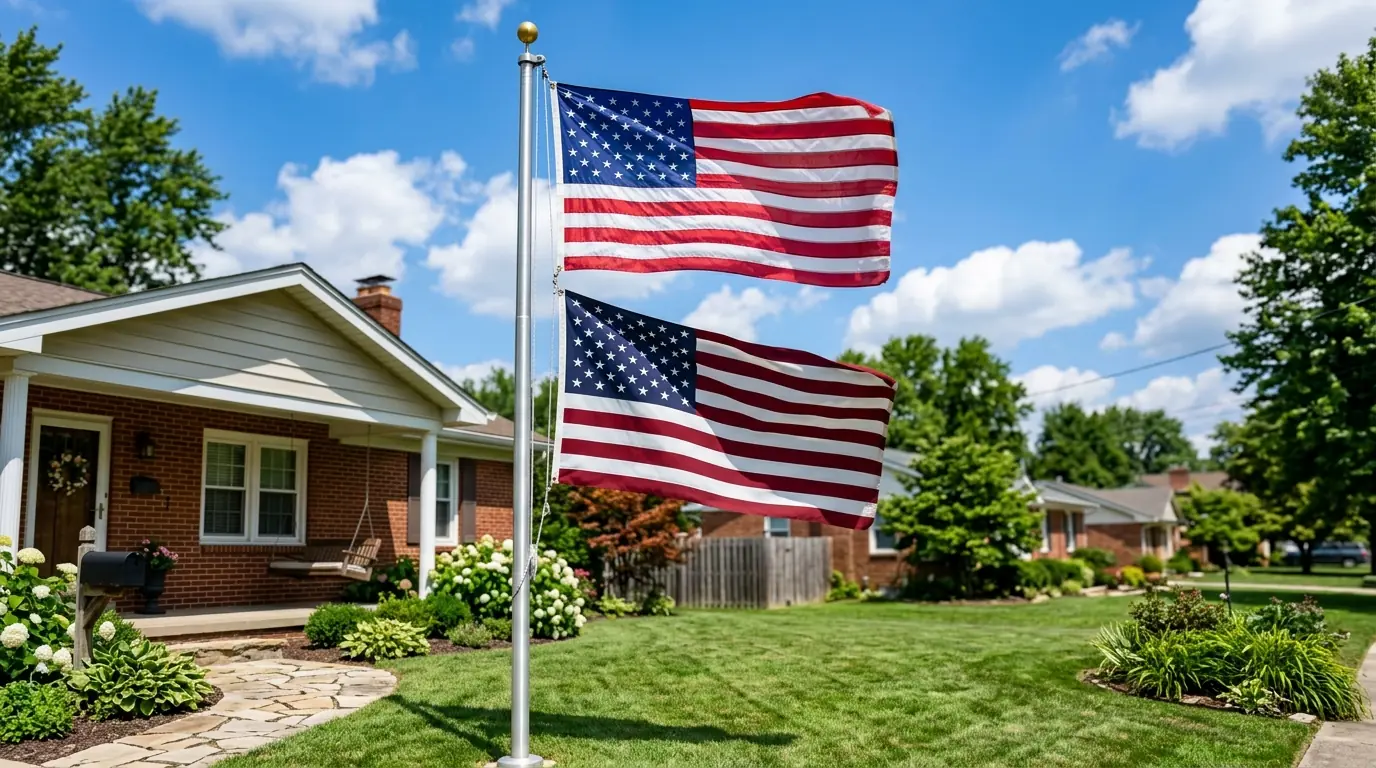
You found a supplier, uploaded your design, and the price looks reasonable. Before you hit "confirm order," there are a handful of things that separate a custom nylon flag that lasts from one that falls apart in weeks. Most of these aren't obvious from product photos or spec sheets — they show up after the flag has been flying for a few months. This guide covers the five checks that matter most, based on what actually goes wrong with custom nylon flag orders and what experienced buyers look for before committing.
Nylon Denier and Fabric Weight — The Foundation Nobody Talks About
Most buyers ordering custom nylon flags focus on design files and turnaround time. The fabric itself barely gets a second thought — until flags start shredding three months in.
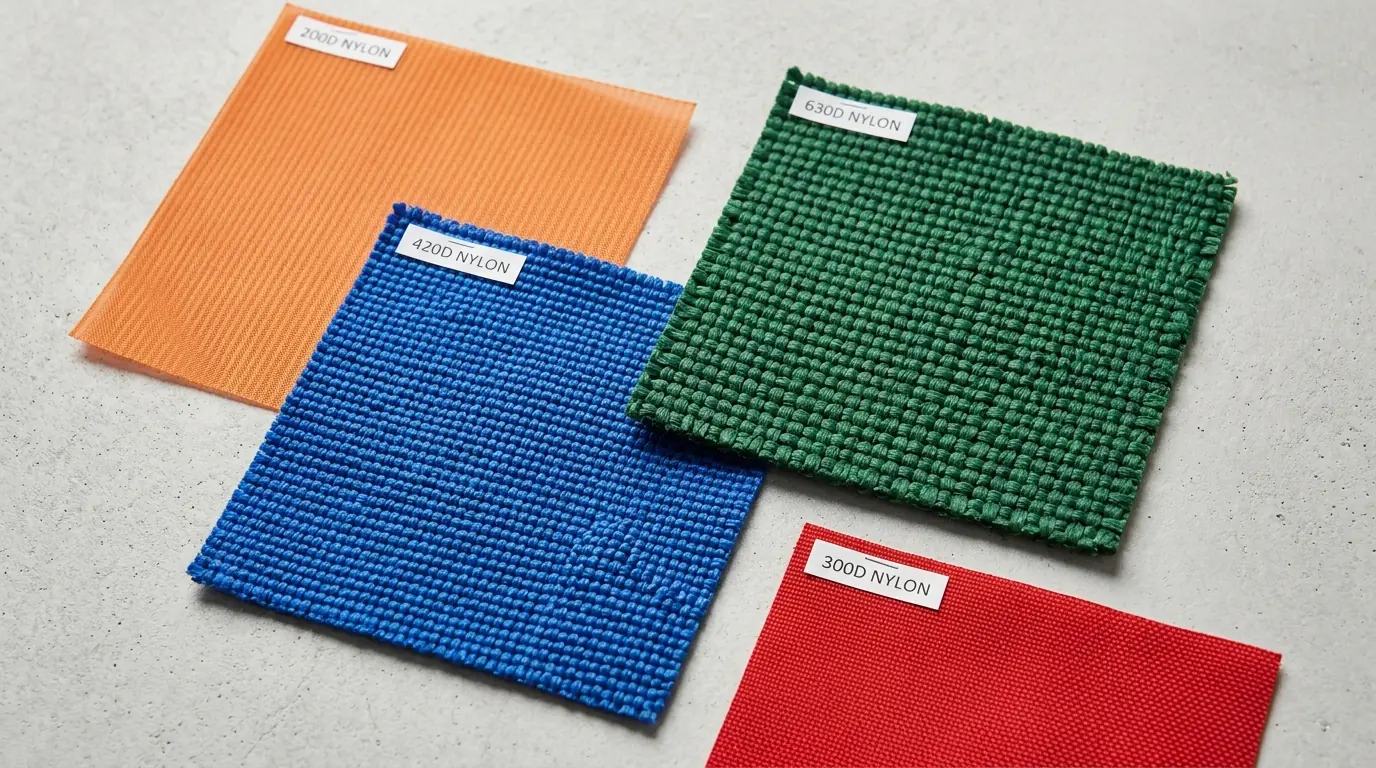
200 denier nylon is the baseline for anything going outdoors. That translates to roughly 2.5 to 3.2 oz per square yard — the same type of fabric you'd find on a quality tent rain fly. Soft, slightly lustrous, with enough body to catch a light breeze without feeling stiff. Drop below 200 denier and you're buying a flag with half the expected lifespan. Some suppliers quote on 70D nylon because it's cheaper to source. It prints fine. It just won't survive a full season outside.
There's a common assumption that heavier fabric equals a better flag. Not true for nylon. A 400D nylon flag weighs nearly double, needs noticeably stronger wind to fly properly, and puts more stress on your pole hardware. If you're displaying on a standard residential or commercial pole in mild conditions, 200D is the sweet spot. Save the heavy-duty options for banners that hang flat rather than fly.
One thing worth asking your supplier directly: the exact denier spec, not just "nylon." If they can't tell you the denier rating without checking, that's already telling you something about how closely they control their material sourcing. A fabric swatch settles most questions fast — authentic 200D nylon has a distinct soft hand and slight sheen that's hard to fake.
Stitching Construction — Where Cheap Custom Nylon Flags Come Apart
Fabric gets the attention. Stitching determines whether your flag lasts a year or a season.
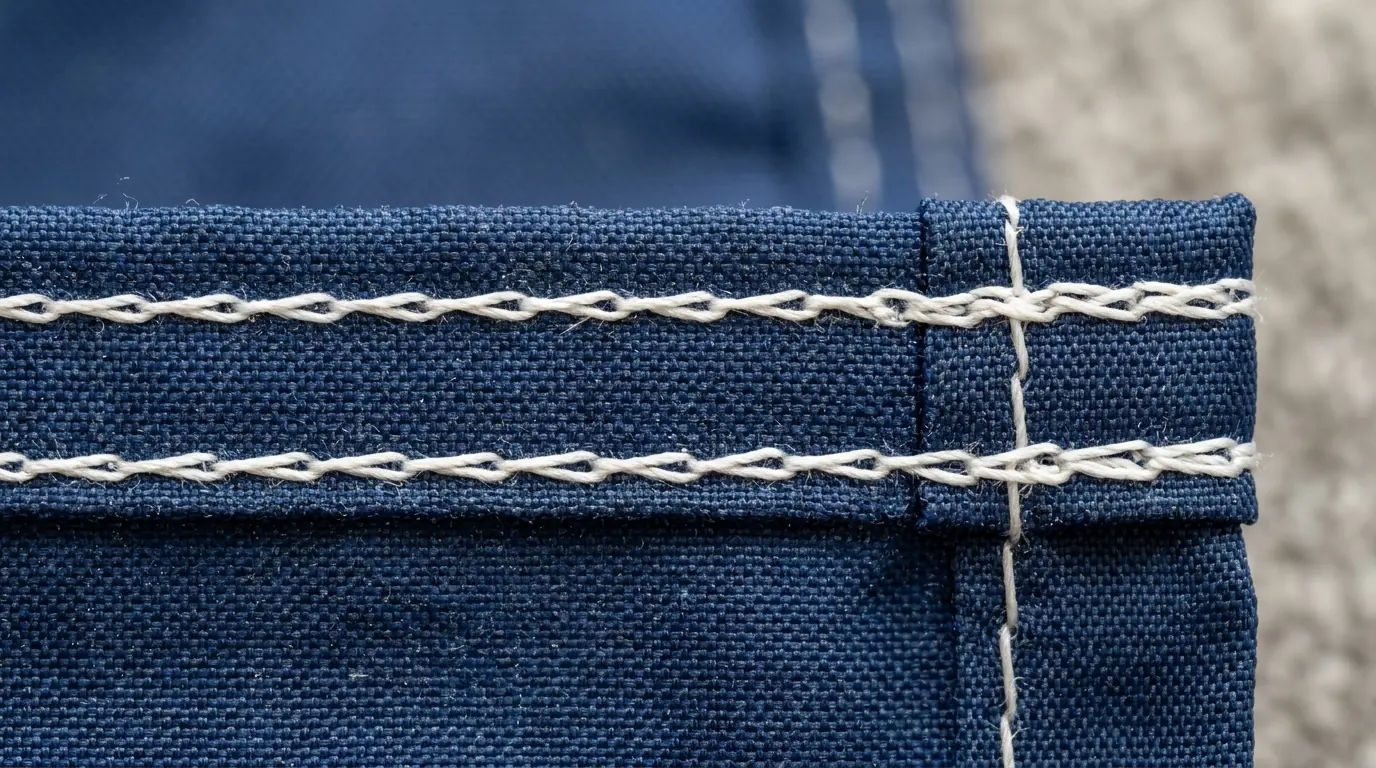
The minimum on any custom nylon flag is double-needle lock stitching on all seams. That's the U.S. government standard — roughly a quarter-inch seam width, five to eight stitches per inch. Single-stitch hems are the most common shortcut on budget flags, and they're the first thing to fail. Hems should fold at least five-eighths of an inch before the double stitch catches the inner edge.
The fly end — the side opposite the pole — takes the worst beating from wind. For flags up to 4x6 feet, four rows of lock stitches at the fly end is the baseline. Larger flags need six to eight rows. This is where you see the biggest gap between a $15 flag and a $45 flag. The cheap one has two rows. It looks fine on day one. By month eight, the fly end is fraying into ribbons.
Headers deserve the same scrutiny. Four rows of stitching through 1.5 to 2-inch polyester webbing is standard. High-wind installations need wider webbing — up to 3 inches. If a supplier can't tell you their header width and stitch count, they probably aren't tracking it.
A quick way to judge before committing to a bulk order: request a production sample and look at the stitching under good light. Even, tight stitches with parallel reinforced rows and no puckering — that separates a manufacturer who controls quality from one just filling orders. You can also see how a proper flag production process works to understand what goes into each step. For flags flying in exposed coastal or high-wind locations, flag corner reinforcement patches for durability add an extra layer of protection where stress concentrates most.
Header and Grommet Quality — Small Hardware, Big Consequences
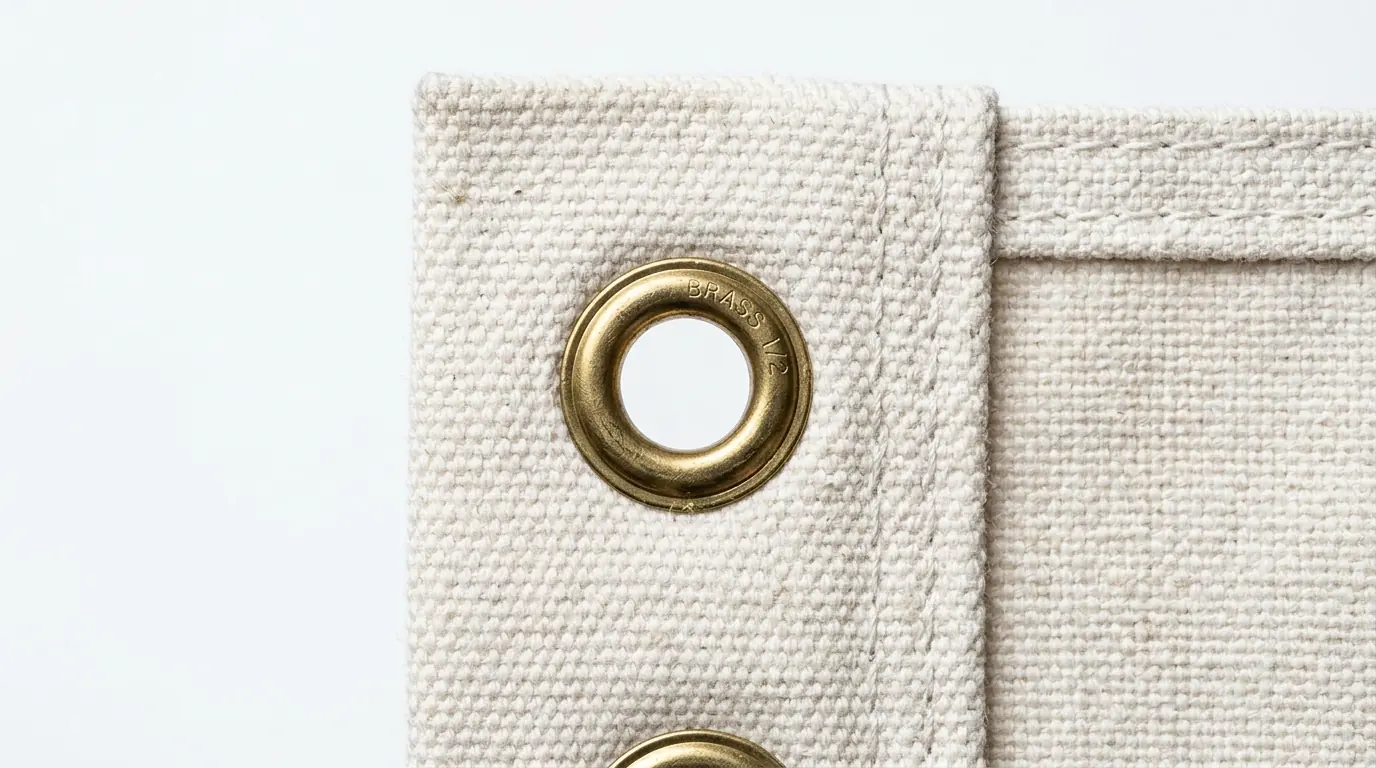
Grommets and headers sound like minor details until a flag rips free from the pole during a storm. The attachment points carry constant stress, and the materials matter more than most buyers expect.
The header — the reinforced strip along the pole side — should be heavy-duty canvas duck. White cotton-polyester blend is the industry standard. Some lower-cost suppliers substitute thin polyester webbing. It stretches under tension, and once it stretches, the grommet holes elongate and the flag pulls loose. A windy week can do it.
For grommets, solid brass is standard for outdoor flags. Specifically, #2 rolled-rim brass grommets with toothed edges for grip. Aluminum and zinc-plated grommets corrode fast outdoors — sometimes within one season. It's a small cost difference at the manufacturing level, but some suppliers default to cheaper metals unless you specify. For more on brass flag grommets for outdoor durability, it's worth understanding the grades available.
Grommet count follows flag dimensions. A standard 3x5 gets two. At 5x8 or larger, you need three. Giant flags — 15x25 and up — require additional grommets spaced to distribute wind load evenly. If your supplier doesn't adjust grommet count for larger sizes automatically, that's a sign they lack experience with custom outdoor flags at scale.
Practical note for larger orders: flags 8x12 feet or bigger often need rope heading with galvanized steel thimbles instead of standard grommets. The attachment method changes at that scale. A supplier who only offers grommets for oversized flags probably hasn't produced many. For venues or events that need flags displayed in open coastal areas, partnering with a weather-resistant outdoor flag supplier ensures hardware specs match the actual wind load.
Print Method Compatibility — The Mistake That Wastes Entire Orders
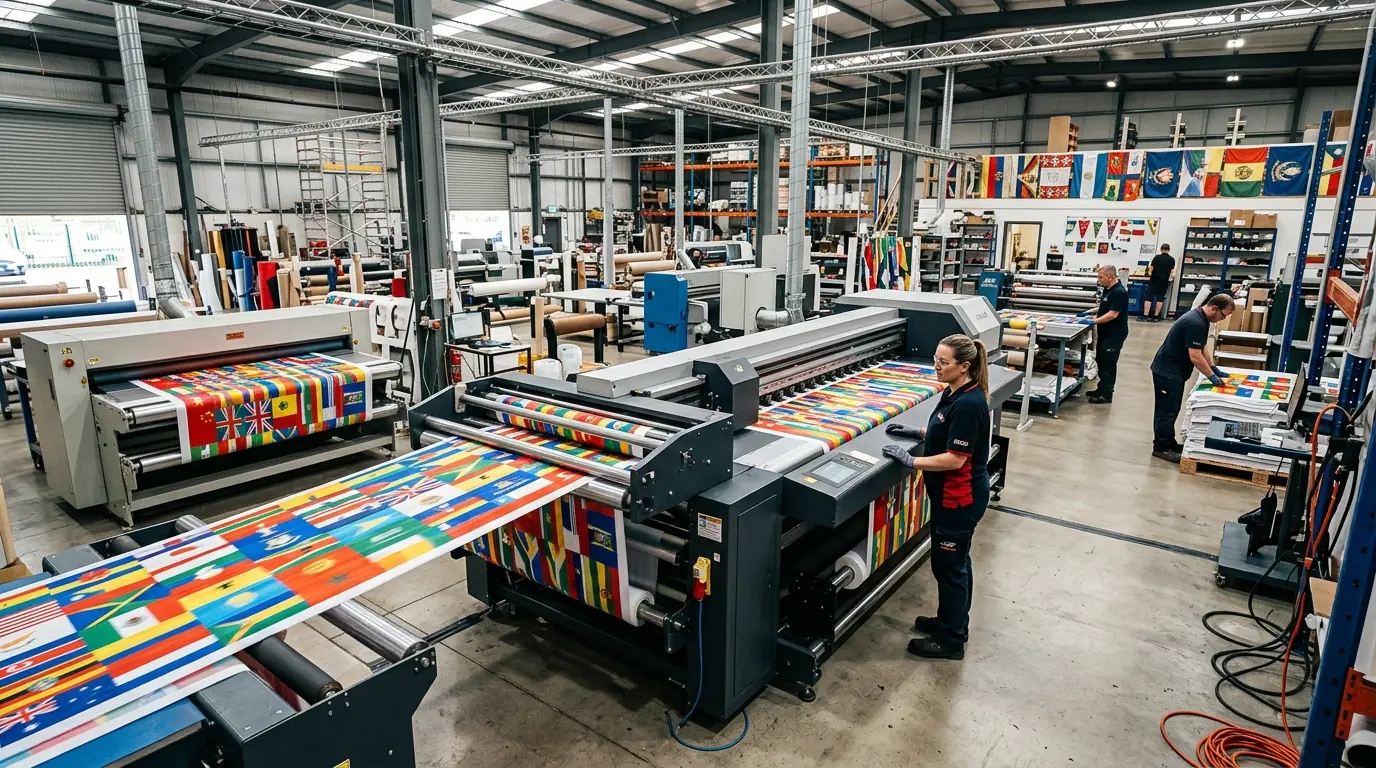
This check saves the most money, and it's the one buyers skip most often.
Nylon cannot be dye-sublimated. Dye-sublimation needs polyester — at least 65% content, ideally 100%. If you specify nylon fabric and a supplier quotes you dye-sub printing, either they don't know their materials or they're planning to swap to polyester without telling you. Both scenarios should end the conversation.
So what prints well on nylon? Three main options, each with different tradeoffs.
Screen printing handles bold, simple designs well — clean edges, strong color saturation, near-complete show-through to the reverse side. The catch: a minimum order around 10 units because of screen setup costs. Not practical for designs with many colors or photographic detail.
Digital direct-to-fabric opens up full-color, photo-realistic work with unlimited colors and no price penalty for complexity. Show-through runs 80 to 100 percent on single-reverse flags. It's the most versatile choice for custom nylon flags with detailed logos or gradients.
Acid-dye printing is the best route for exact Pantone color matching — and for brand flags, color accuracy usually matters. Not every supplier offers acid-dye on nylon, so confirm capability before you finalize. Assuming exact PMS colors will transfer correctly with digital printing is a common and expensive mistake.
Single-sided versus double-sided isn't just a readability choice. Double-sided flags need a blackout liner between two printed layers. That adds weight and cost. For most outdoor display where the flag reads from one direction, single-reverse is the practical call. Reserve double-sided for situations where two-way readability is genuinely essential — otherwise you're paying more for a heavier flag that flies worse. If you want to compare flag materials and printing methods side by side, that's a good starting point.
Supplier Red Flags — Warning Signs That Should Stop an Order
The fastest way to evaluate a custom nylon flag supplier isn't asking what they offer. It's noticing what they avoid.
No physical samples before bulk. Any supplier refusing a production sample is hiding something — usually in stitching quality or material grade. Samples cost them almost nothing relative to the information they give you. If they push back, walk away.
Vague material specs. "Nylon flag" or "premium nylon" with no denier rating is meaningless. A credible supplier specifies 200D minimum for outdoor flags without being asked. If you press them for a denier number and still don't get a clear answer, the fabric is almost certainly below standard.
Delivery promises that don't add up. Custom nylon flags with proper sewing construction need at least five business days, often closer to ten. A supplier promising 24-hour turnaround on custom orders is using heat-press methods — fast, but the result frays quickly and won't hold up outdoors.
Pricing tells its own story. Legitimate custom nylon flag production runs roughly $10 to $30 per square foot depending on quantity and complexity. Below $5 per square foot, you're almost certainly getting heat-pressed thin material or commodity product with no quality controls. That doesn't mean the most expensive quote is automatically best — but pricing that seems too good usually is.
The simplest test: ask the supplier to confirm the denier of their nylon, the number of stitch rows on the fly end, and the header material. A professional custom flag manufacturer answers these without hesitation. A reseller scrambles. You can also request a free custom flag quote to compare how different suppliers respond to specific technical questions. Institutions ordering official banners should also verify whether a bulk national flag supplier can meet government color and construction standards before committing.
When Nylon Is the Right Call — and When Polyester Makes More Sense
Not every custom flag project calls for nylon. Choosing the wrong material for your conditions wastes more money than any other single mistake in flag ordering.
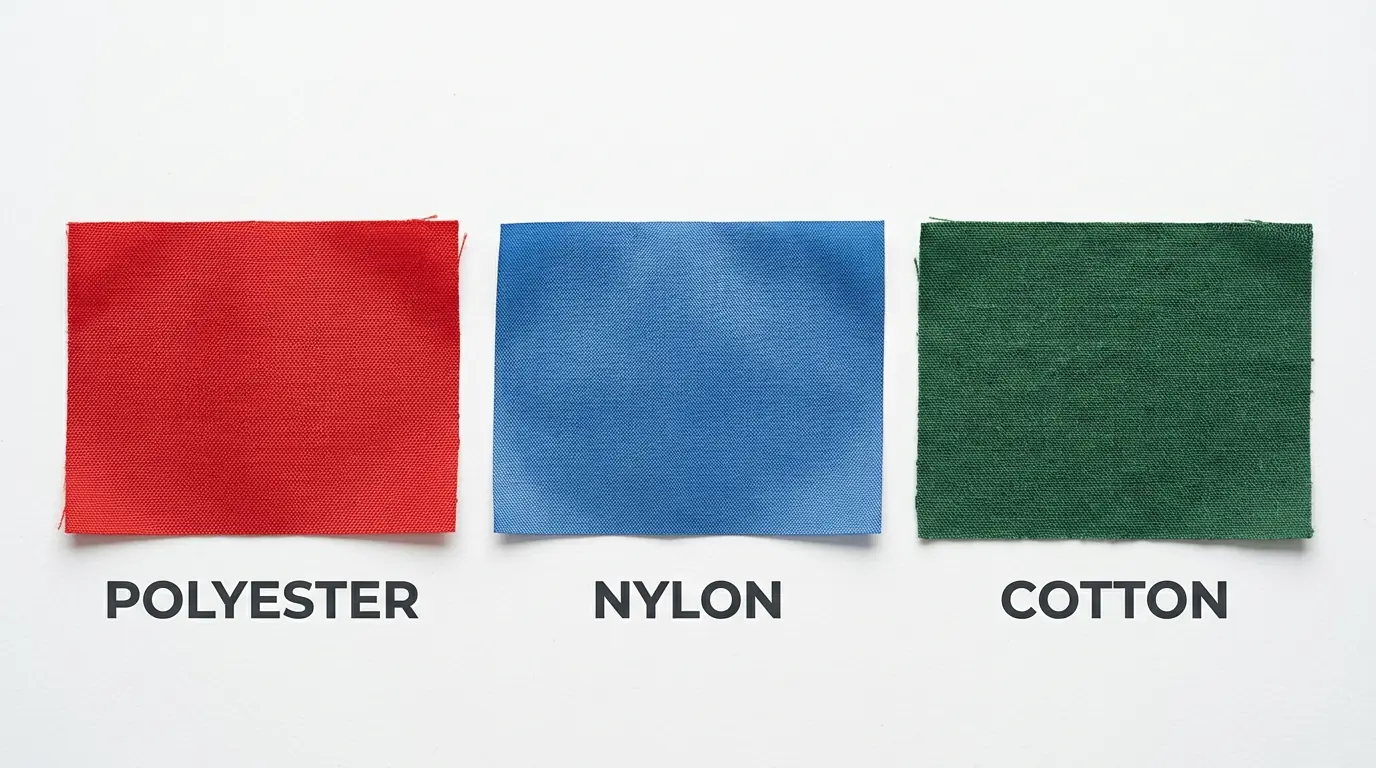
Nylon shines in lighter wind — residential flagpoles, wall-mounted displays, sheltered commercial locations. It flies gracefully in breezes under 15 mph, dries fast after rain, and costs 20 to 40 percent less than comparable polyester up front. For event flags, seasonal displays, or any situation where the flag isn't flying around the clock, nylon usually delivers better value.
Polyester earns its premium in sustained wind above 15 mph, coastal environments, and year-round continuous display. It resists tearing better and holds color longer under intense UV. If you need dye-sublimation for a photo-realistic design, polyester is your only option.
The cost math shifts over time. Nylon's lower purchase price looks good on a first order. But if you're flying flags nonstop in harsh conditions, replacing nylon twice a year can cost more per month than a single polyester flag lasting the full year. For mild climates and intermittent use, nylon wins on lifetime cost. For 24/7 commercial display in exposed locations, polyester almost always pays for itself.
Quick filter if you're undecided: will the flag fly every day in wind above 15 mph? Go polyester. Anything less, nylon gives you better movement, better appearance, and a lower price. Check with a custom flag supplier experienced in both materials if your conditions fall somewhere in between.
Making the Final Call on Your Custom Nylon Flag Order
If you've worked through each of these five checks — denier, stitching, hardware, print method, and supplier credibility — you already know more than most first-time flag buyers. The biggest risk isn't picking the wrong design. It's trusting a supplier who can't answer basic material questions.
For a first order, start with a single production sample before committing to bulk. Verify the denier, check the fly-end stitching rows, and confirm brass grommets. Match your print method to nylon's actual capabilities — screen or digital for most jobs, acid-dye if PMS accuracy matters. And if you're on the fence between nylon and polyester, default to nylon for mild conditions and polyester for anything harsh or continuous.
Your next step: get a quote from a flag manufacturer who can confirm these specs on the first call. If they can't, keep looking.