Why The Indoor/Outdoor Distinction Matters More Than Most Buyers Realize

Using an indoor flag outdoors is the single most common purchasing mistake in the flag market, and it happens more often than it should because the distinction is not always obvious from a product listing. Both types look like flags. Both are made from fabric with colors printed on them. The difference is in the material specification, the construction details, and what happens to each type after three weeks of sun, rain, and wind exposure.
A correctly specified outdoor nylon flag in a moderate wind environment lasts three to six months before visible deterioration. An indoor cotton flag used in the same outdoor environment may last two to three weeks before the fabric starts to degrade, the colors fade, and the hems begin to fray. That is not a small difference — it is a function of the fact that indoor flags use lighter, finer weave fabrics designed for display in controlled environments, not for daily wind stress and UV exposure.
The cost difference between indoor and outdoor specifications is real but smaller than most buyers expect. Correctly specified outdoor flags typically cost 20-50% more upfront than indoor equivalents in a similar size. Over a full year of use, an outdoor flag that lasts six months and gets replaced once costs less than replacing an indoor flag every two to three weeks because someone made the wrong specification call. Getting the spec right at the outset is cheaper than the replacement cycle that results from getting it wrong.
Indoor Flag Materials: Cotton, Velvet, And Display-Grade Polyester
Cotton is the premium indoor flag material. Its dense weave gives a rich color depth and a draped texture that looks appropriate in ceremonial settings — government offices, boardrooms, parade presentations. Indoor cotton flags typically feature pole sleeves rather than grommets, decorative fringe at the fly end, and a flannel lining at the pole heading. The construction signals ceremonial purpose: these flags are designed to stand in holders or be carried, not to fly in wind.
The limitation of cotton indoors is moisture sensitivity. Cotton absorbs humidity, which can affect drape and, over time, color vibrancy. In a climate-controlled office or government building, this is a non-issue. In a lobby with exterior air exposure or a venue with variable humidity, it is worth considering. Cotton is also typically more expensive than display-grade polyester for equivalent sizes.
Display-grade polyester for indoor use is lighter and less textured than outdoor polyester — it is printed rather than woven, and the fabric weight runs in the 75-110gsm range. The visual result is less rich than cotton but more consistent across colors, and the cost is generally lower. For office lobbies, conference room display, and institutional settings where the flag needs to look professional rather than ceremonial, display-grade polyester is the practical choice. The construction details — pole sleeve mounting, velcro tabs, sometimes decorative fringe — are the same as cotton indoor flags. To see the range of flag materials and printing capabilities available for indoor applications, comparing cotton and polyester specifications side by side is the most useful exercise.
Outdoor Flag Materials: Nylon vs Polyester
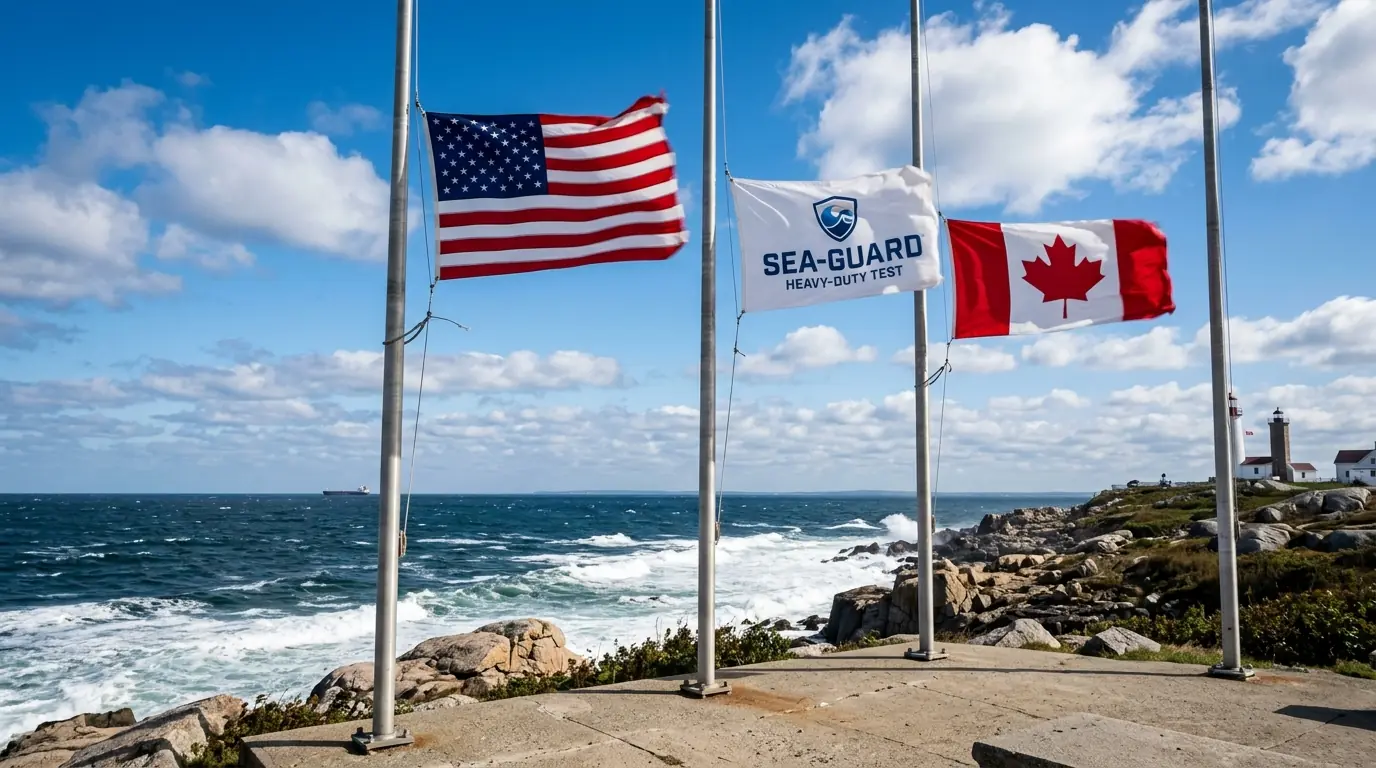
Nylon is the dominant outdoor flag material in the US market, and for good reason. It is lightweight, which means it flies in light breezes where heavier fabrics would hang limp. It has good natural UV resistance, is water-repellent, and dries quickly after rain. For residential flagpoles, moderate commercial installations, and applications where the flag needs to fly consistently rather than just hang, nylon is the baseline specification.
Heavyweight polyester (200-300gsm) is a different category. Where nylon is optimized for flyability, heavyweight polyester is optimized for durability under sustained stress — high wind, heavy rain, 24/7 outdoor exposure at commercial flagpoles, marinas, and coastal locations. It is denser, heavier, and more resistant to tearing. In high-wind environments where a nylon flag might shred within a month, a correctly specified polyester flag may last three to four months under the same conditions. The trade-off: it needs stronger wind to fly, and it is more expensive.
For most buyers, the decision framework is straightforward. Moderate wind environment, residential or light commercial flagpole, aesthetics and flyability matter: nylon. High-stress wind environment, commercial or maritime installation, durability is the primary concern: heavyweight polyester. The mistake is applying residential-grade nylon specifications to a coastal commercial installation because it is the default outdoor material — context matters. To explore flag hardware that supports different outdoor installation types, commercial-grade flag poles from our factory are designed for both nylon and polyester flag weights.
Construction Details That Separate Good From Poor Quality
The header — the reinforced panel at the pole edge of the flag — is the first place to look when evaluating construction quality. Outdoor flags should have a canvas header with brass grommets; the canvas absorbs the stress of wind pull at the attachment point, and brass grommets resist corrosion better than aluminum equivalents. Indoor flags use pole sleeves or velcro tabs instead of grommets, which is appropriate for their use context but signals indoor-only construction if you see it on something marketed as outdoor.
Lockstitch hem construction and bar-tack reinforcement at the corners and grommet holes are the other primary quality indicators for outdoor flags. The fly end — the edge opposite the pole — takes the most stress from wind movement. Four rows of stitching on the fly end is standard for quality outdoor construction; two rows is a cost-reduction indicator that will show up as fraying failure under sustained outdoor use.
A construction detail worth knowing about for large flags in high-wind locations: two-ply open weave allows air to pass through the fabric rather than catching it. This reduces the wind load on the flag and the flagpole hardware significantly. For large-format outdoor flags at exposed commercial installations, this construction detail extends useful life meaningfully. For the appropriate display hardware to pair with different flag weights and outdoor applications, reviewing wholesale flag stands and base systems alongside your flag specification helps ensure the full installation is matched correctly.
Reading Fabric Weight Specs To Make The Right Choice
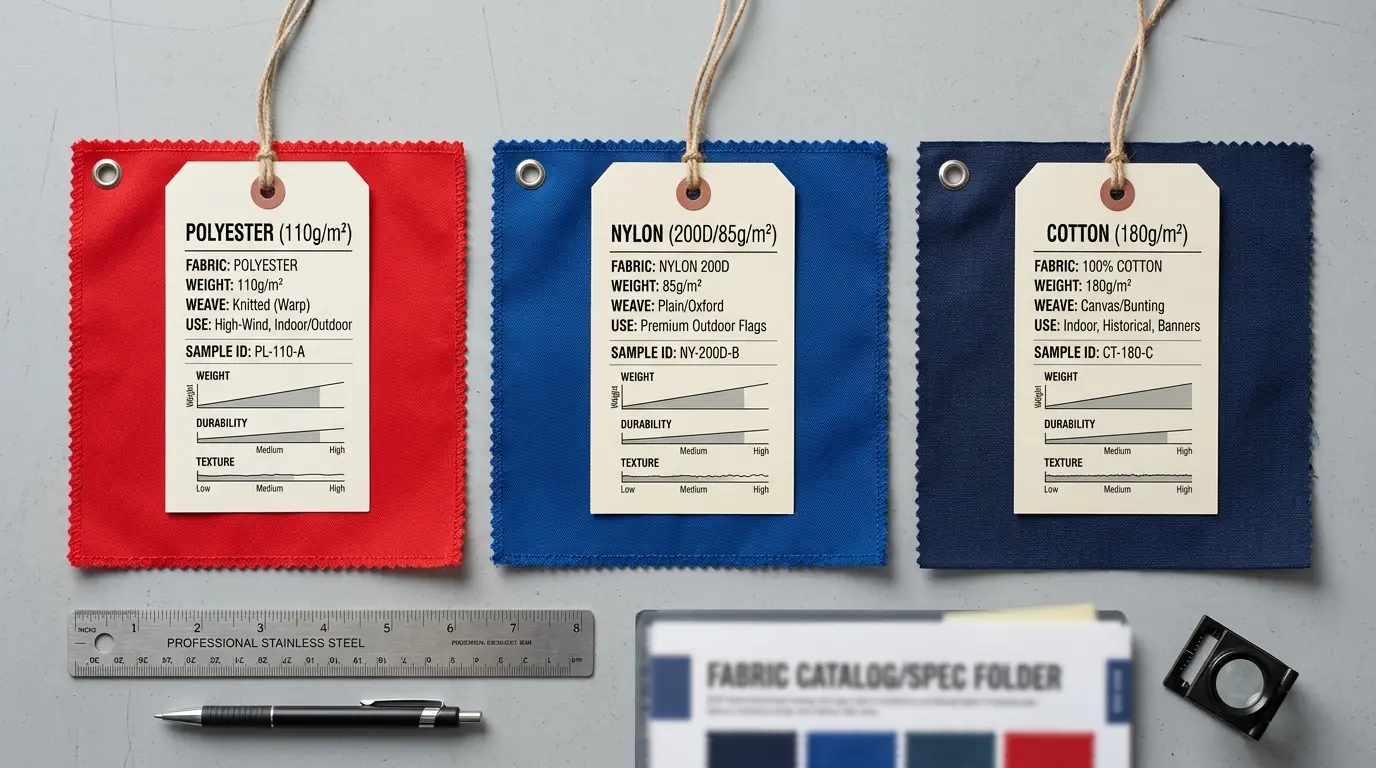
Fabric weight is the single most useful specification number for matching a flag to its application. The general ranges: 75-110gsm is indoor or display-grade; 110-150gsm covers light outdoor and event use; 150-200gsm is standard outdoor; 200-300gsm is commercial heavy-duty outdoor. These are not absolute thresholds — context matters — but they give you a reliable starting framework for evaluating a supplier's spec sheet.
There is a verification problem worth knowing about: suppliers sometimes misrepresent gsm. If quality is critical — particularly for ongoing institutional or government supply — ask for the gsm specification in writing as part of the purchase order, and weigh a sample on a kitchen scale to verify before committing to bulk. The calculation is straightforward: measure the flag dimensions, convert to square meters, weigh the flag in grams, and divide. Significant deviation from the stated spec is a compliance failure that you should document before accepting the order.
UV rating matters as much as weight for outdoor durability. The branded UV protection systems from established US manufacturers — SolarGuard from Valley Forge Flag, SolarMax from Annin — represent documented UV resistance testing rather than generic claims. If you are sourcing outdoor flags that need to maintain color vibrancy over an extended installation, asking specifically about UV protection standards is not an unreasonable requirement. A quality official-quality national flag printing service should be able to provide colorfastness documentation for their outdoor materials.
Buying The Right Flag For Specific Business Contexts
Lobbies, boardrooms, and government offices call for indoor ceremonial flags — cotton is preferred, pole sleeve mounting, decorative fringe optional depending on the formality of the setting. The flag needs to look dignified and remain stable in a holder, not fly. Over-specifying for outdoor durability in this context wastes money; under-specifying by buying a cheap polyester display flag for a formal government installation signals a quality gap that clients will notice.
Retail storefronts and car dealerships typically need outdoor nylon with grommets for moderate wind environments. If the location is coastal, prairie, or otherwise high-wind, step up to heavyweight polyester. The failure mode of nylon in high-wind conditions — accelerated fraying at the fly end — is preventable by correct material specification at the outset. For buyers sourcing outdoor flags for multiple client locations with different wind exposure profiles, maintaining two specs (standard nylon and heavyweight polyester) is worth the additional inventory management.
Trade shows and temporary events are their own category. Portability matters more than long-term durability, which typically means lightweight indoor polyester in a display pole set or outdoor nylon in a ground spike system. For buyers looking at custom feather flag manufacturer options for event use, lightweight outdoor nylon is the standard specification that balances flyability, portability, and cost. To explore the complete range of outdoor display options, weather-resistant outdoor flag factory production capabilities cover the full spectrum from event-grade to permanent commercial installation. For a broader view of your sourcing options, our custom flag manufacturing company handles the full range from indoor ceremonial through commercial outdoor specifications. If you want to discuss your specific requirements, send us your flag design for a quote with the installation context included so we can recommend the right material for your application.