A youth soccer league coordinator orders twenty 2x3 ft team flags for a weekend tournament—then watches parents squint from the bleachers, unable to read a single logo. The flags cost $400 total, and they’re essentially invisible past the first row.
That’s the kind of mistake this guide helps you skip. Whether you’re outfitting a single team or dressing an entire stadium for a championship weekend, the decisions around sports flags come down to a handful of practical tradeoffs: size versus budget, custom versus stock, durability versus weight. Get those right, and your flags do their job for years. Get them wrong, and you’re reordering before next season.
Here’s what actually matters when buying sports flags for teams and events—broken down by flag type, size, material, hardware, and budget.
Choosing the Right Flag Type for Your Sport and Event Format
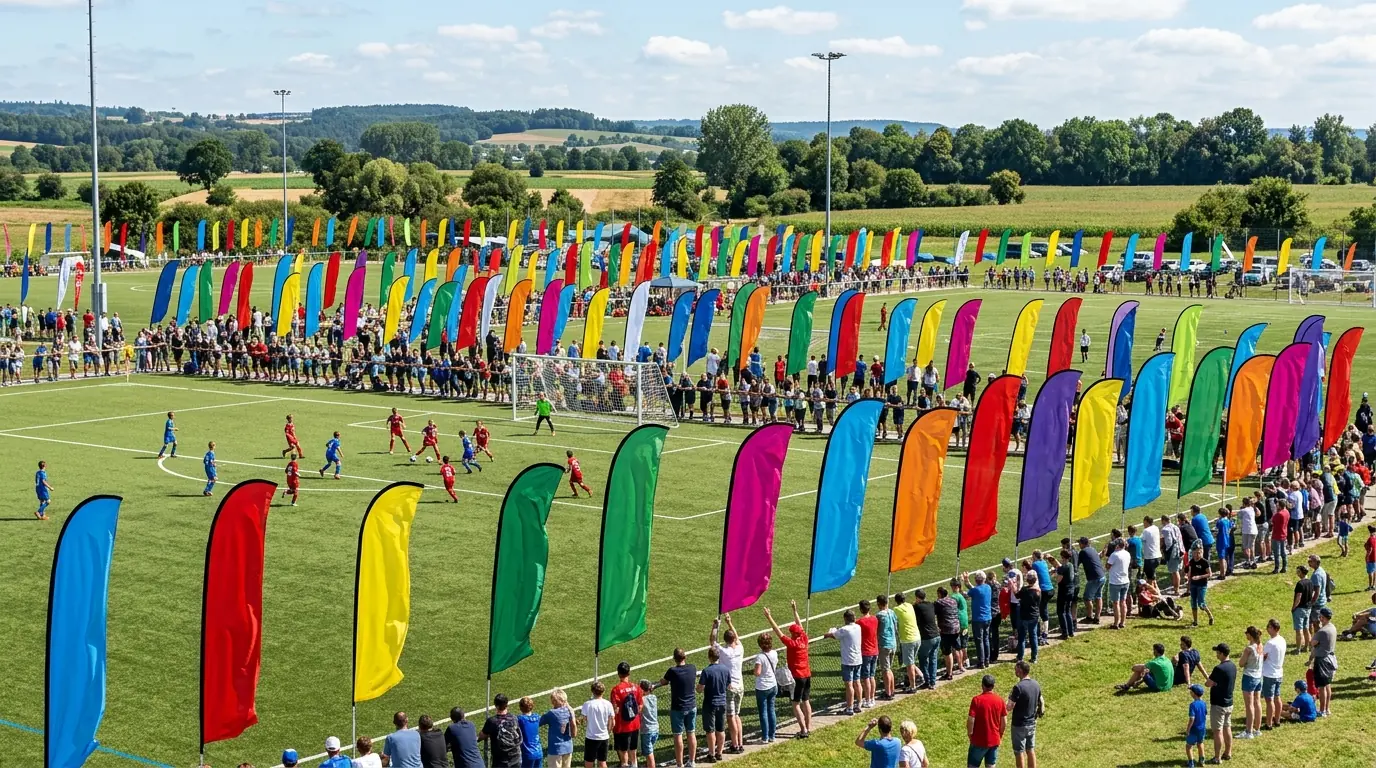
Not every sports flag serves the same purpose, and picking the wrong shape or size for your venue is the fastest way to waste money.
wholesale feather flags for outdoor events are the workhorse of outdoor sporting events. Standing between 6.5 and 17 feet tall, they create movement even in light wind and stay visible from 50 to 100 feet away. A complete custom feather flag manufacturer kit—flag, poles, and spike—starts around $124.99 for a 12 to 15 ft setup. They work best for directing foot traffic at tournaments with bulk custom sports flags for events, marking registration areas, and lining field perimeters. But they’re single-purpose: you wouldn’t hand one to a cheerleader.
Spirit flags and field runners fill that gap. Sized between 5x3 and 8x5 ft, built from lightweight 4 oz polyester with pole pocket construction, these are designed to be carried. Dye-sublimation printing gives them 4+ years of color life even with regular outdoor use. For mascots, cheerleaders, and field-entry moments, nothing else really works.
Standard rectangular team flags—typically 3x5 ft—handle everything from tailgate setups to indoor arena walls. For major venues, stadium-sized versions run from 30x60 ft up to 90x100 ft for end-zone displays, though those sit in a completely different pricing tier.
Shape matters more than most buyers realize. Rectangular flags maximize your design space and are the default for team logos and country flags. Pennant and triangular flags catch attention at celebrations and fan zones. custom teardrop flag supplier options stay taut in a breeze without drooping, which makes them the better pick for outdoor directional signage. Handheld stick flags—small rectangular or pennant shapes—are the go-to for fan giveaways and crowd engagement, and wholesale car flags for dealership promotions follow the same portable logic.
The real question isn’t “what looks good” but “where will people see this flag, and from how far away?” A sideline flag that needs to be carried requires different construction than a parking lot flag that needs to survive a season of wind.
Size Guide — Matching Flag Scale to Viewing Distance and Venue Type
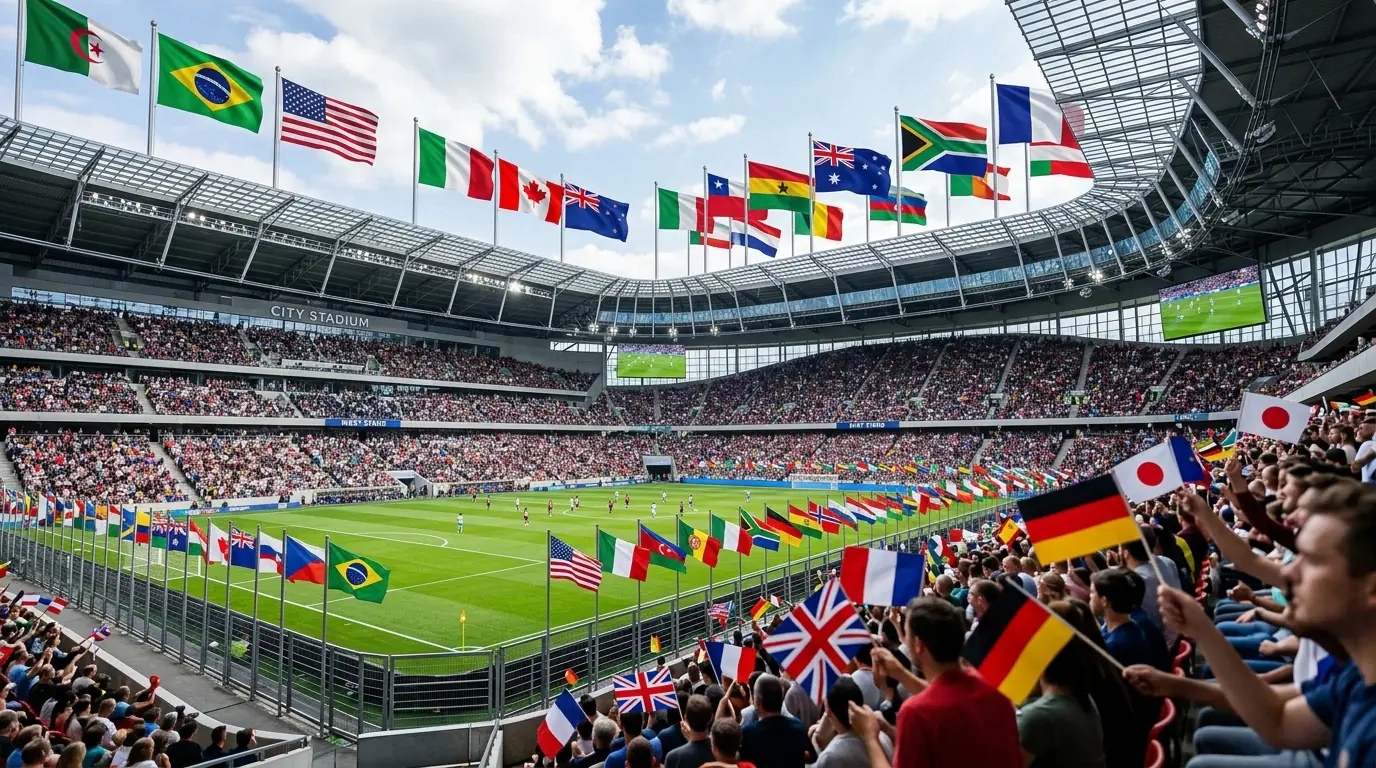
Most sizing mistakes happen because buyers think about the flag in isolation instead of thinking about where the farthest viewer will be standing.
Here’s the practical breakdown: a 12x18 inch garden flag works fine for a registration table where people are within 10 to 30 feet. A 2x3 ft flag covers medium outdoor venues and sideline marking at 30 to 75 feet. The standard 3x5 ft team flag—the most common size in sports—is readable from about 30 to 50 feet in good conditions, making it suitable for most outdoor venues up to 150 feet. Beyond that, you need 4x6 ft or 5x8 ft for stadium seating areas at 150 to 300 feet. For parking lot approach or commercial pole display at 300+ feet, go 6x10 ft minimum.
Feather flags follow their own height logic for events. A 6.5 ft feather flag suits indoor events and vendor booths. Eight-foot versions handle sideline marking. Ten-foot flags work at field entrances. For stadium concourses and parking lots, you’ll want 13.5 to 17 ft.
One rule saves you from the most common proportional mistake: flag height should be 25 to 33 percent of pole height. A 3x5 ft flag belongs on a 20 to 25 ft pole. Put a 6x10 ft flag on a 15 ft pole and it looks unbalanced—plus the flag won’t fly properly because there’s not enough clearance above it.
The mistake that costs real money? Ignoring text readability. Lettering needs to be at least 12 inches tall to read at 200 feet. A 2x3 ft flag that looks crisp on your desk becomes a colorful blur from row 10 of the bleachers. For sports venues with viewers at multiple distances—sideline, bleachers, parking lot—size for the farthest seats, not the closest. A 4x6 ft flag covers most varied-seating scenarios without pushing into expensive large-format territory.
Materials and Printing — What Holds Up Through Wind, Rain, and Multiple Seasons
Material choice determines whether your sports flags last one tournament or three full seasons. The price difference between a flag that fades in four months and one that holds color for years is often less than $20 per unit.
4 oz polyester is the baseline for outdoor sports flags. It’s UV-resistant, colorfast, and machine washable—everything you need for a team spirit flag that gets used weekly. Step up to 6 oz polyester when sustained high wind is a factor; the added weight creates stiffer movement but better durability in exposed locations like open fields and coastal venues. Nylon flies beautifully in light breeze and costs less, but it breaks down faster under prolonged UV exposure. Use nylon for indoor events or short-term outdoor displays, not for season-long field use.
Printing method matters just as much as fabric. Dye-sublimation is the industry standard for custom sports flags because the ink embeds directly into the fibers. No surface coating means no cracking, peeling, or fading after repeated washing and sun exposure. Screen printing costs less for simple one-to-three color designs, but the ink sits on the surface and degrades faster outdoors. Digital printing handles photo-realistic images and complex gradients well—useful for promotional flags—but offers only moderate outdoor durability.
Single-sided flags show a mirror image on the back at about 50 to 60 percent opacity. That’s acceptable for wall-mounted or fence-mounted displays. Double-sided flags include a liner layer so both sides display identical imagery—essential for pole-mounted flags at intersections or entrances where both sides face traffic. Expect to pay 40 to 60 percent more for double-sided construction, so only upgrade when both sides genuinely get equal viewing time.
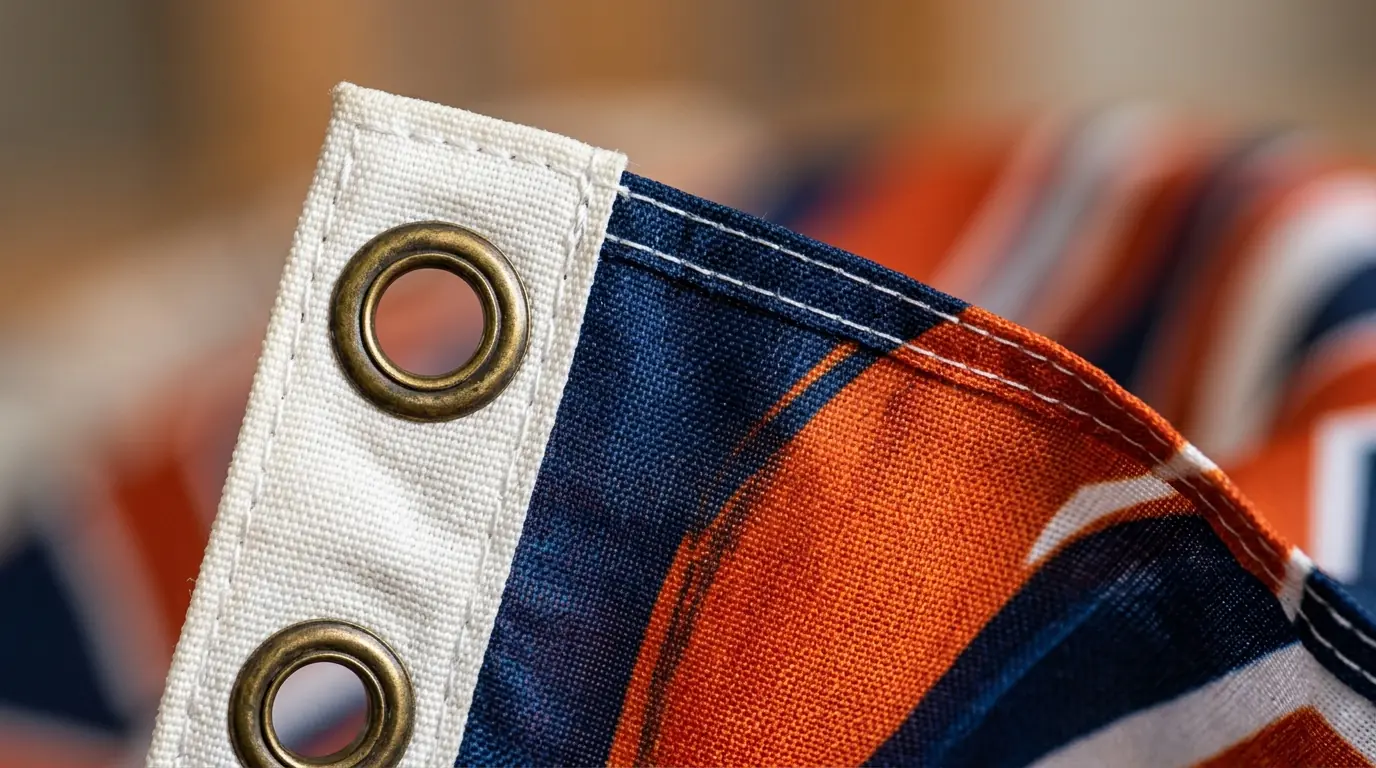
One detail that separates flags that last from flags that fray: reinforced stitching on the fly edge. That’s the side farthest from the pole, and it takes 90 percent of wind wear. Canvas headers with brass flag grommets for outdoor durability handle standard attachment. professional flag printing and material options printing retains color vibrancy for 12 to 18 months of continuous outdoor display—and stretches to 3 to 4 years with periodic washing and proper storage between seasons.
Custom vs. Stock Flags — The Decision That Affects Total Event Cost
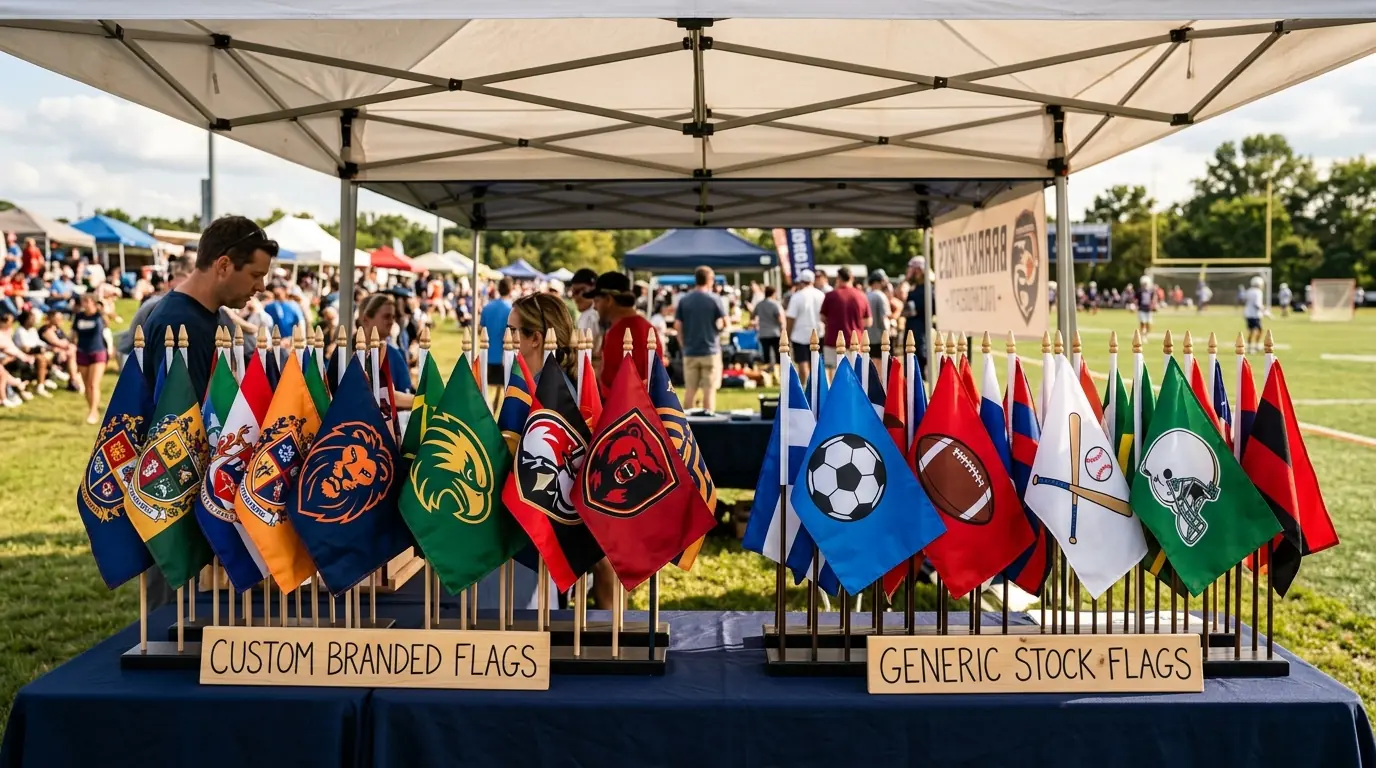
This is where most sports flag budgets either get optimized or quietly wasted. The custom-versus-stock decision isn’t about quality preference—it’s about how many times you’ll use the flag.
Stock sports flags run $10 to $40 per unit. A complete stock feather flag package with poles and spike is about $55. They ship same-day or next-day, and they work perfectly for situations where speed and volume matter more than branding: tournament directional signage, zone markers, generic venue dressing, and bulk promotional flag solutions for campaigns. If you need 50 flags by Friday for a one-weekend event, stock is the only realistic option.
Custom flags cost $50 to $150 per unit for standard sizes, with complete feather flag kits running $100 to $200. A semi-custom package starts at $99.99. Production takes 2 to 3 weeks standard or 1 to 3 days with rush pricing. The per-unit cost drops significantly at quantity breaks—3, 6, 12, 25, 50, 100, 250, 500, and 1,000 units all trigger new pricing tiers.
Here’s the math that changes the calculation: a custom team logo flag at $100 amortizes to under $5 per event by season three for a league running 20+ games per year. That same team buying stock flags at $25 each, replacing them every season because the generic design doesn’t build recognition, spends more over three years than the custom order cost upfront.
The tradeoff isn’t always clear-cut. New teams testing a logo design should start with stock or semi-custom—spending $150 on a custom flag for a brand identity that changes next year is worse than spending $40 on a stock flag you’ll outgrow intentionally. Established programs with locked-in branding should go custom every time.
One production requirement catches first-time buyers off guard: custom flags require vector artwork—review the OEM flag ordering process from design to delivery before submitting—AI, EPS, or high-resolution PDF files. Low-resolution PNG or JPEG files produce blurry prints. This is the single most common ordering mistake, and it adds 2 to 5 days to your timeline while the manufacturer requests corrected files.
Hardware and Mounting Systems — Ground Stakes, Poles, and Bases
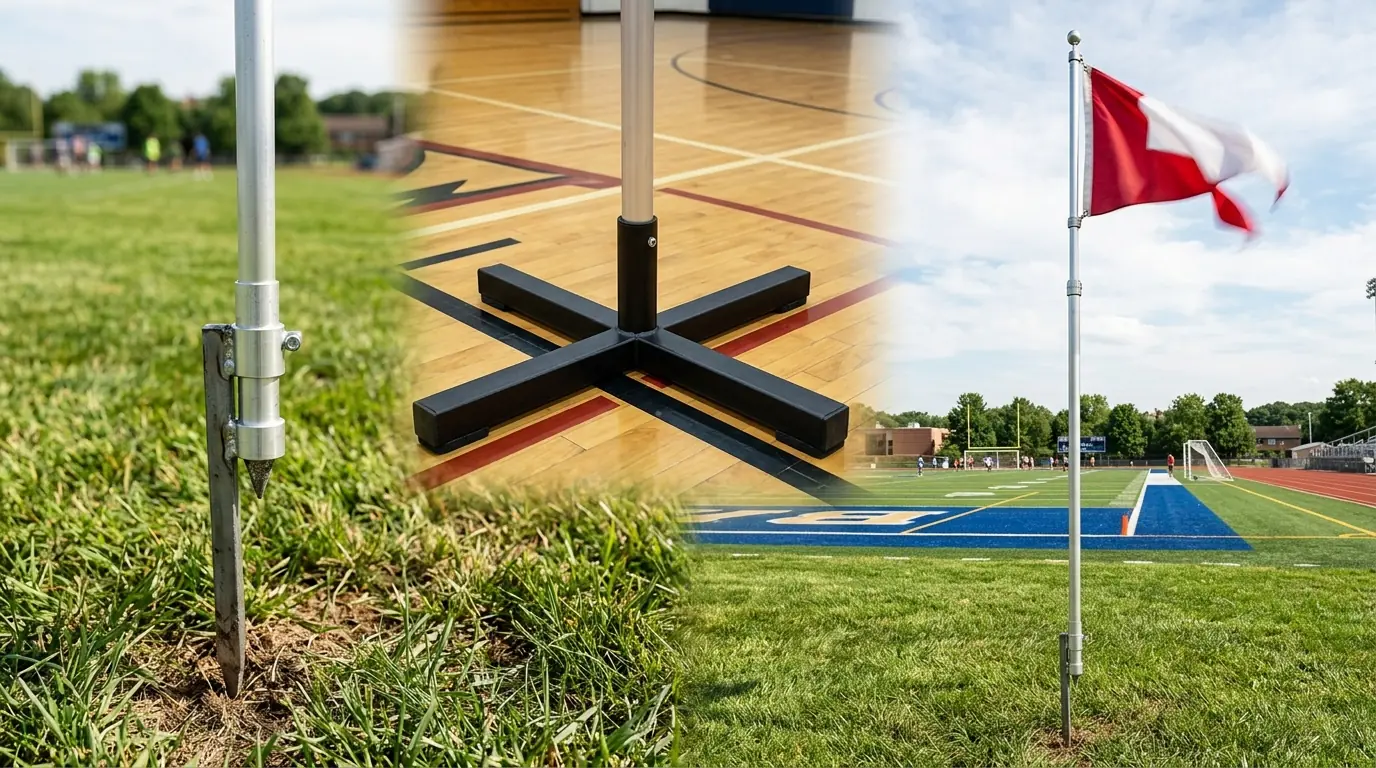
The flag gets the attention, but the hardware determines whether it stays upright through a full day of competition. Choosing the wrong base for your venue is a setup-day headache you only make once.
For grass fields—the most common sports venue surface—steel ground stakes are the default. Most feather flag kits include one. You hammer the stake 14 to 15 inches into the ground, slide the 1-inch diameter aluminum pole into the receptacle, and you’re set. Individual stakes run about $2.50 to $4.00. They’re portable, reliable, and perfectly adequate for weekend tournaments and seasonal league play.
Indoor venues need cross bases. These sit flat on tile or concrete, weigh 10 to 15 lbs with an added weight bag, and prevent tipping in the drafts that move through gyms and arenas. Without the weight bag, a cross base in a gymnasium with industrial ventilation will tip over during the second quarter—count on it.
Hardscape venues—parking lots, tracks, tennis courts—require a different approach since you can’t drive stakes into asphalt or concrete. Weighted water bags (10 to 15 lbs when filled) or flag display hardware and base systems solve this. Tire bases are especially practical for roadside or parking lot events: drive a vehicle tire over the base plate and the flag isn’t going anywhere.
Pole material affects performance more than most buyers expect. commercial-grade aluminum flag poles are standard: lightweight, corrosion-resistant, available in 60 and 72 inch lengths. Fiberglass poles offer more flex, which cheerleaders and field runners prefer, but they crack on hard impact—keep them away from contact-sport sidelines. Telescoping aluminum poles adjust from 6 to 20 feet and make multi-venue use practical when you’re moving between facilities with different ceiling heights or field dimensions.
Think of hardware as a capital expense. A league investing $500 in 10 complete flag setups pays just $2.50 per event over a 20-game season in year one. By year two, the per-event hardware cost is negligible.
Ordering Timeline and Budget Planning for Sports Events
Starting the flag conversation three days before your event is a recipe for rush fees. Planning six weeks out saves money and gives you room for the artwork revisions that almost always happen.
Standard custom flag production runs 7 to 10 business days after artwork approval. Add 1 to 3 days for initial proof review and at least one revision round. Factor in 3 to 7 business days for ground shipping. That’s a realistic minimum of three weeks from first email to flags in hand. Rush production cuts manufacturing to 1 to 3 days, but adds a 25 to 40 percent premium—and you still need artwork approved before the clock starts.
Volume pricing changes the economics substantially. At 10+ units, expect 10 to 15 percent off standard pricing. At 25+, discounts reach 20 to 25 percent. At 50+, you’re looking at 25 to 30 percent off. Orders above 100 units typically get custom quotes with 30+ percent savings. One practical tip: if you’re running a league with 8 teams, coordinate a single bulk order across all teams instead of each team ordering separately. The quantity break from 8 individual orders to one 40-flag order can cut per-unit cost by 20 percent.
Budget frameworks by event scale help you plan realistically. A small local event for one team runs $200 to $500 total—enough for 2 to 4 custom flags plus hardware. A tournament with 8 to 16 teams needs $1,000 to $3,000, mixing stock directional flags with custom team flags. A full league season with 20+ games requires $3,000 to $8,000 upfront, but amortizes to $150 to $400 per event by season two.
Always build in 10 to 15 percent contingency. Rush replacement orders, last-minute additions, and the inevitable “we forgot we need flags for the sponsors’ tent” happen at every event. Budgeting for them upfront costs less than scrambling for rush production after the fact.
What to Do Next
Buying sports flags well comes down to three decisions made in the right order: pick the flag type and size based on your venue’s farthest viewing distance, choose materials that match your expected use frequency, then decide custom versus stock based on how many events you’ll reuse them.
For teams and leagues planning to use flags across a full season or longer, custom flags on quality polyester with dye-sublimation printing pay for themselves by the third season. For one-off tournaments or events where speed matters more than brand consistency, stock flags with same-day shipping get the job done without the lead time.
Start your order at least three weeks before game day. Collect team logos in vector format now—before the production clock starts. And budget 10 to 15 percent above your flag estimate for hardware, shipping, and the rush order you’ll inevitably need.
If you’re sourcing sports flags for a league, school athletic program, or event series, get in touch for bulk flag pricing to lock in bulk pricing before your season starts.